
Every paid order moves through product allocation, visual inspection, functional checks, timegrapher review where applicable, customer QC approval, and only then dispatch. The QC is for the specific watch allocated to the order—not a stock photograph of the same reference.
Our release target
For a fully wound, stable movement tested in the stated position, we target a displayed timegrapher rate within ±5 seconds per day. That reading is a short bench measurement, not a lifetime accuracy promise; position, wind, temperature, magnetism, shipping, and wear can change real-world performance.
The live QC and approval workflow
Order and configuration match
We match reference, dial, bezel, case finish, bracelet or strap, movement label, and any selected option to the paid order.
Visual and functional inspection
The team checks the dial, markers, hands, date, bezel, crown, crystal, case, bracelet, clasp, winding, setting, and model-specific function.
QC media within the target window
High-resolution photos and, when useful, video or timegrapher evidence are normally prepared within 2–3 business days. Allocation or replacement stock can extend that target.
Your approval or question
Review the exact watch. Ask about a visible point before approving; we will clarify the evidence or re-check it.
Pack and dispatch
After approval, protective films remain in place where practical, the watch is packed securely, and tracking is supplied after carrier acceptance.
What appears in a useful QC set
Identity views
Full dial, caseback, both case sides, crown, clasp, bracelet or strap, reference-specific features, and movement view when the construction permits it.
Alignment views
Straight-on photos for markers, rehaut, date centering, cyclops, bezel insert, hand alignment, printing, and lume application.
Function evidence
Crown positions, winding, date change, GMT jumping hour, chronograph start/reset, bezel action, and clasp operation as applicable to the model.
QC examples from our current reference workflow
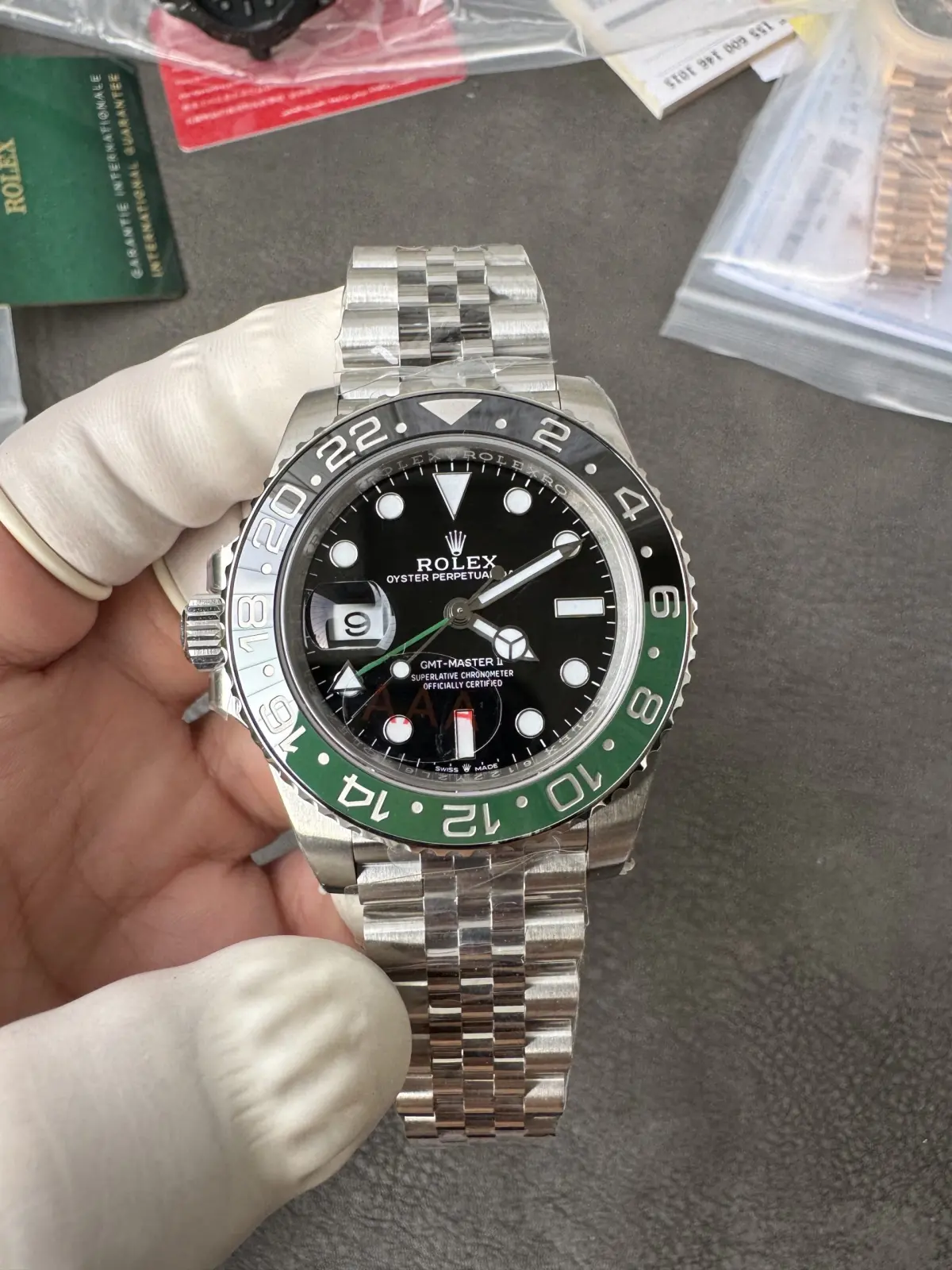
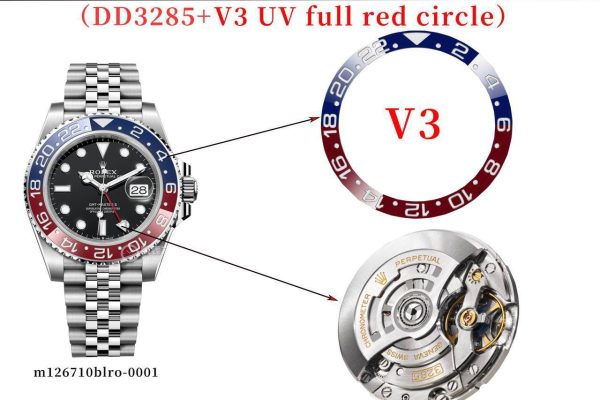
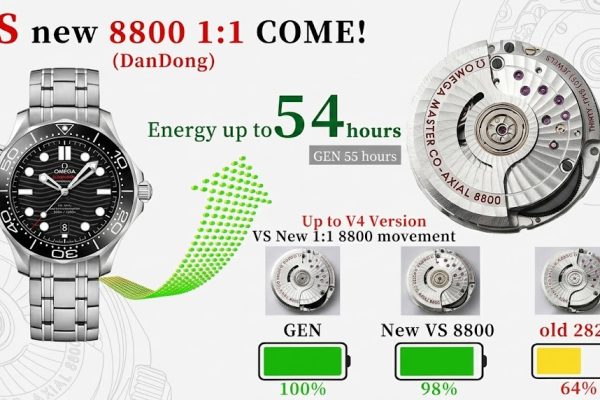
These are process examples, not the QC package for a future order. Customer-specific QC media is shared privately and the current allocated watch remains the final reference.
How to read timegrapher evidence
| Reading | What it helps show | How we interpret it |
|---|---|---|
| Rate (s/day) | Short-term gain or loss in the tested position | We target a stable display within ±5 s/day before release, while recognizing that wrist results vary. |
| Amplitude | Balance swing under the stated wind and lift-angle setup | Read with position and state of wind; one isolated number is not a complete diagnosis. |
| Beat error | Timing symmetry at the test moment | Lower and stable is preferred; the trace should also be visually consistent. |
| Trace | Consistency during the short test | We look for a clean, stable trace rather than selecting a favorable instant. |
What QC does not prove
- A timegrapher clip does not certify water resistance. Do not swim or dive with the watch unless a qualified local watchmaker pressure-tests that exact watch.
- A decorated bridge or rotor does not by itself prove the movement architecture beneath it.
- A single photo cannot prove a multi-day power reserve. Treat the product listing as the stated specification and request clarification when reserve is decisive.
- QC cannot promise that a mechanical watch will never require regulation or service after transport and wear.