
At a glance
Why buyers choose replica watches for design, price, style testing and hobby interest—and when an homage or genuine watch is the better answer.
People buy replica watches mainly because they want the look, size, or mechanical experience of a luxury design without paying the original watch’s price. Other buyers use one to test a style, wear it in situations where they would not risk an expensive original, or explore watchmaking as a hobby. Those reasons do not make a replica authentic, authorized, or free of legal and ethical concerns.
We sell disclosed replicas, and we think the seller should explain both the attraction and the compromises. A good sales conversation begins with why the customer wants the watch. That answer often determines whether a replica, an homage, a pre-owned genuine watch, or no purchase at all is the better choice.
1. The design is the main attraction
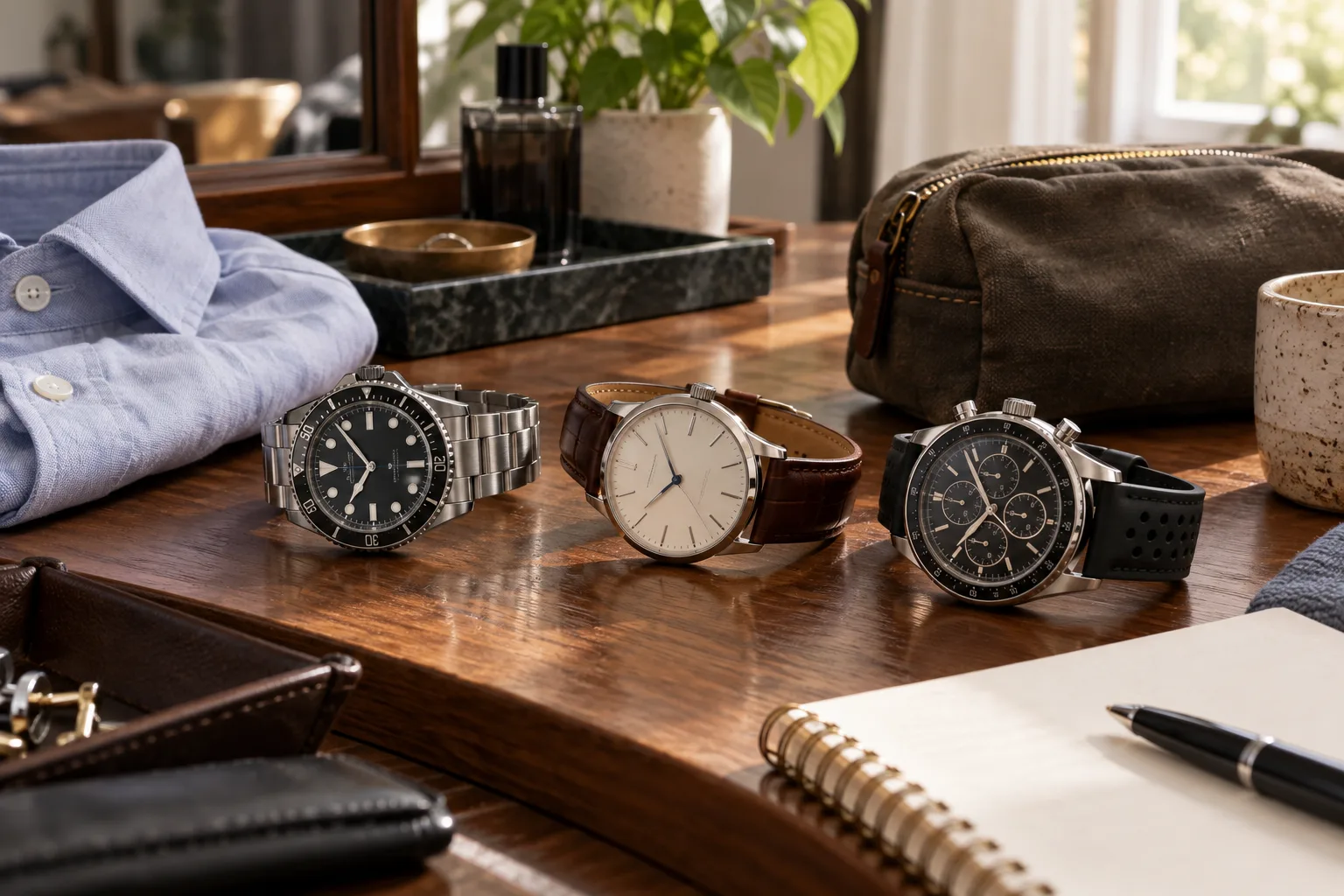
Many customers first notice a case shape, dial layout, bezel, bracelet, or color combination. They may like a Submariner-style diver, a Datejust-style fluted bezel, or a GMT layout without caring about investment value or official brand service. A higher-detail replica can reproduce much of that visual language at a lower entry price.
The tradeoff is identity. Copied branding does not come with original provenance. Experienced collectors, authenticators, and watchmakers may identify differences in the dial, crystal, case, bracelet, movement, or finishing. A buyer should want the object for personal enjoyment, not as a way to mislead another person.
2. Buyers want to try a size or model
A 36 mm dress watch, 41 mm Datejust-style case, thick dive watch, or large chronograph can feel very different on the wrist. Some customers use a replica to learn whether a design works with their wrist, clothing, and daily routine before considering a genuine purchase.
This can be useful, but the replica may not match the genuine watch exactly in weight, balance, bracelet articulation, thickness, or crown feel. It is a style trial, not a perfect substitute for handling the original at an authorized retailer.
3. The price is more accessible
Luxury watches can cost many thousands of dollars. A replica may cost a small fraction of that amount, but “less expensive” is not the same as “cheap to own.” The customer still needs to consider shipping, possible customs loss, pressure testing, regulation, service, and the chance that a specialized movement will be difficult to repair.
We encourage buyers to compare total ownership cost, not only the product price. Our replica value guide explains when the lower purchase price makes sense and when an homage or genuine watch is the stronger choice.
4. Some buyers enjoy the technical comparison
Enthusiasts may study case dimensions, dial printing, crystal optics, bezel action, bracelet tolerances, and movement layouts. For them, the watch is part object and part research project. They compare factories and versions the way other hobbyists compare cameras, keyboards, or model kits.
The risk is chasing labels instead of evidence. “1:1,” “Swiss grade,” and “super clone” are not controlled standards. A thoughtful buyer compares an exact reference and current batch, then reviews the allocated watch. See our guide to replica grades for a specification-based method.
5. A lower-cost watch can feel easier to wear
Some customers do not want to carry the financial worry of damaging or losing an expensive original during travel, commuting, or ordinary work. A replica may feel less stressful. That does not make it disposable: a mechanical watch still benefits from careful handling and sensible water precautions.
Travel also introduces customs and import rules. A seller cannot promise that a copied-brand product will be admissible in every country or immune from inspection. The buyer must understand the destination’s rules before ordering or crossing a border.
Replica, homage, and pre-owned genuine: three different answers
| Choice | What it offers | Main compromise |
|---|---|---|
| Replica | Copied design and branding at a lower price | No authenticity, original warranty, or reliable resale |
| Homage | Similar style under the maker’s own brand | Not a close branded reproduction |
| Pre-owned genuine | Authenticity and a recognized secondary market | Higher price and need for provenance checks |
If brand history, resale, official service, and provenance matter most, a genuine watch is the appropriate product. If the buyer likes only the general style and wants a cleaner legal and ethical position, an homage deserves serious consideration.
Who should not buy a replica watch?
- Anyone who needs guaranteed authenticity or original-brand support.
- Anyone planning to resell, insure, pledge, or present the watch as genuine.
- A buyer who cannot accept customs or trademark risk.
- A person who expects perfect quality control and permanent water resistance.
- Someone without access to an independent watchmaker for future service.
- A buyer who would be uncomfortable explaining honestly what the watch is.
Questions we ask before recommending a model
We ask which design and size the customer wants, which details matter most, whether the watch will be exposed to water, how important movement accuracy is, and whether local service is available. We also ask whether a simpler movement would be preferable to a more reference-correct but specialized clone.
Once the goal is clear, the buyer can compare references rather than buying the first version described as “best.” Our safe-buying checklist covers identity, payment, QC, shipping, and maintenance in order.
Our honest merchant view
A replica can be an enjoyable personal watch for a customer who understands exactly what it is. It should not be sold with invented provenance, an original warranty, or promises of guaranteed authentication. We would rather lose a sale than place the wrong product with a customer whose real priorities are authenticity, investment value, or official service.
Frequently asked questions
Do people buy replicas to fool others?
Some may, but many buyers are interested in design, price, or mechanics. We do not support using a replica to deceive another person or presenting it as genuine.
Is buying a replica the same as buying a homage?
No. A homage normally uses its own brand, while a replica with copied marks imitates the original brand’s identity.
Can a replica become collectible?
It may interest a niche hobbyist, but it should not be treated as an investment or sold as genuine. Resale access and value are uncertain.
Is a replica a good way to test a genuine model?
It can help with general size and style, but differences in weight, finishing, ergonomics, and movement mean it cannot replace handling the genuine watch.
Disclosure: VSFHQ.com is an independent replica-watch retailer and information resource. Products discussed are replicas and are not manufactured, sponsored, authorized, or warranted by the original brands referenced for design identification.
We separate listed specifications from observations that must be confirmed on the current production batch. Movement functions, dimensions, and configuration details are cross-checked against the product catalog; QC recommendations identify what a buyer should verify on the allocated watch.